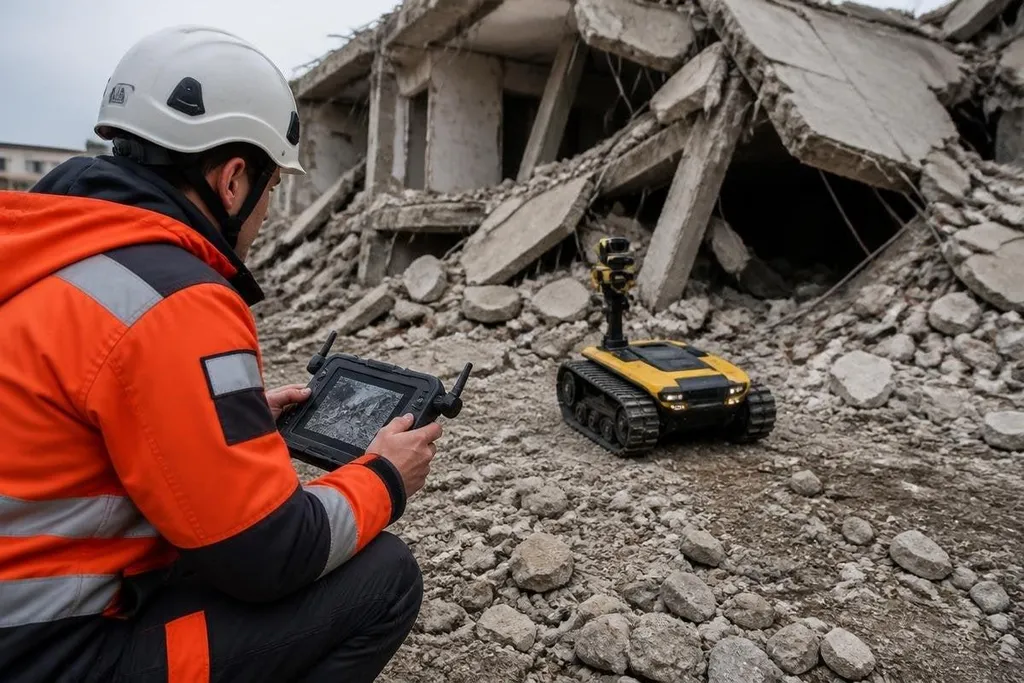
A collapsed building can hide people, gas leaks, fire, and weak floors in the same space. Disaster robots let rescue teams inspect some of that danger from a safer position, but the machines still depend on clear signals, trained operators, and human decisions.
- Ground robots can carry cameras and sensors into damaged buildings.
- Drones can give teams an overhead view before people enter.
- Radio loss, dust, heat, water, and limited battery life can stop a mission.
What disaster robots can do
Ground robots use wheels or tracks to move over broken floors, steps, and loose material. A camera gives the operator a view around corners, while microphones can help detect sounds that a person outside cannot hear.
Some robots carry thermal cameras. These sensors show heat differences, which may help a team check rooms, walls, or piles of debris. A heat image is not proof that someone is trapped, though. Fire, hot pipes, and sunlight can create similar signals.
Drones serve a different job. They can inspect roofs, bridges, industrial sites, and wide outdoor areas without sending a person across unstable ground. Their view can help a team choose an entry point and mark hazards on a site map.
Underwater robots can inspect flooded spaces, ports, tanks, and other areas where visibility and breathing conditions make human entry difficult. Their cameras and sonar can show objects below the surface, but murky water and cables can limit movement.
Where the benefit becomes practical
The main gain is distance. An operator can check a damaged area before a rescue worker crosses the threshold, which gives the team more information before it accepts the risk of entry.
That information can also improve the order of work. A robot may find a blocked route, a live electrical hazard, or a space that is too narrow for a person. The team can then send the right equipment and people to the right place instead of searching blindly.
The value depends on the task. A small tracked robot may fit through a narrow opening, while a drone may cover a large site faster. A machine with a strong light and a stable camera may help more than one with a long list of sensors.
A rescue agency comparing a new robot with field equipment can use disaster robotics reporting from Robot24.com to compare its task, test setting, and limits before relying on it during a rescue.
Where the risks start
The machine can fail before it reaches the target. Rubble may block its wheels, smoke may reduce camera quality, and water may damage hardware that lacks the right protection. A drone may lose control when wind, dust, or poor satellite signals affect its flight.
Communication is another limit. Remote control needs a working link between the operator and the machine. Concrete walls, metal structures, distance, and damaged power systems can weaken that link or stop it altogether.
Battery life also changes the plan. A robot that spends too long searching may need to leave before the team has finished its work. A battery change can take time, and some sites may offer no safe place to charge.
Autonomous software may map an area or move by itself, but that does not mean it can judge a rescue scene like a trained incident commander.
The machine can mistake debris for a person, miss a quiet victim, or choose a route that looks safe on its sensors but fails under weight.
I'd treat autonomous movement as a way to reduce operator workload, not as a replacement for rescue judgment.
A practical buying checklist
Before a rescue team buys or borrows a disaster robot, it should check:
- Target spaces: Measure doorways, stairs, tunnels, flood zones, and likely entry gaps.
- Signal range: Test control and video links through concrete, steel, dust, and standing water.
- Useful sensors: Choose cameras, lights, thermal imaging, gas sensors, or sonar for named tasks.
- Recovery plan: Decide how the team will retrieve the robot after a stall, loss of signal, or battery failure.
- Operator training: Run drills with protective gear, poor visibility, noise, and damaged structures.
- Human control: Set clear rules for when an operator or commander can stop autonomous motion.
A drill should end with a record of failures, not only successful runs. That record tells the team which parts need repair, which sensors confuse the scene, and which tasks still belong to people.
The next useful step for disaster robotics is better field evidence: repeated tests in rubble, smoke, water, weak signals, and low light. Until teams have that record for a specific machine, its safest role is inspection at a distance, with a person still making the call.